
Post by Jasmine Roumieh

This project explores the relationship between humanity and the cosmos through an experiential research and public engagement center located at Pingualuit Crater in Canada. Rooted in the belief that humans are microcosms of the universe, the project seeks to re-establish the human-cosmic connection through architecture that goes beyond observation and becomes immersive, interactive, and sensory. The chosen site, a meteor impact crater preserving Ice Age sediment, acts as a physical manifestation of cosmic influence on Earth, making it an ideal setting for a project that investigates the origins and evolution of the universe. The intervention combines scientific research, education, and experiential architecture within a remote and powerful natural landscape shaped by astronomical phenomena and extreme environmental conditions.

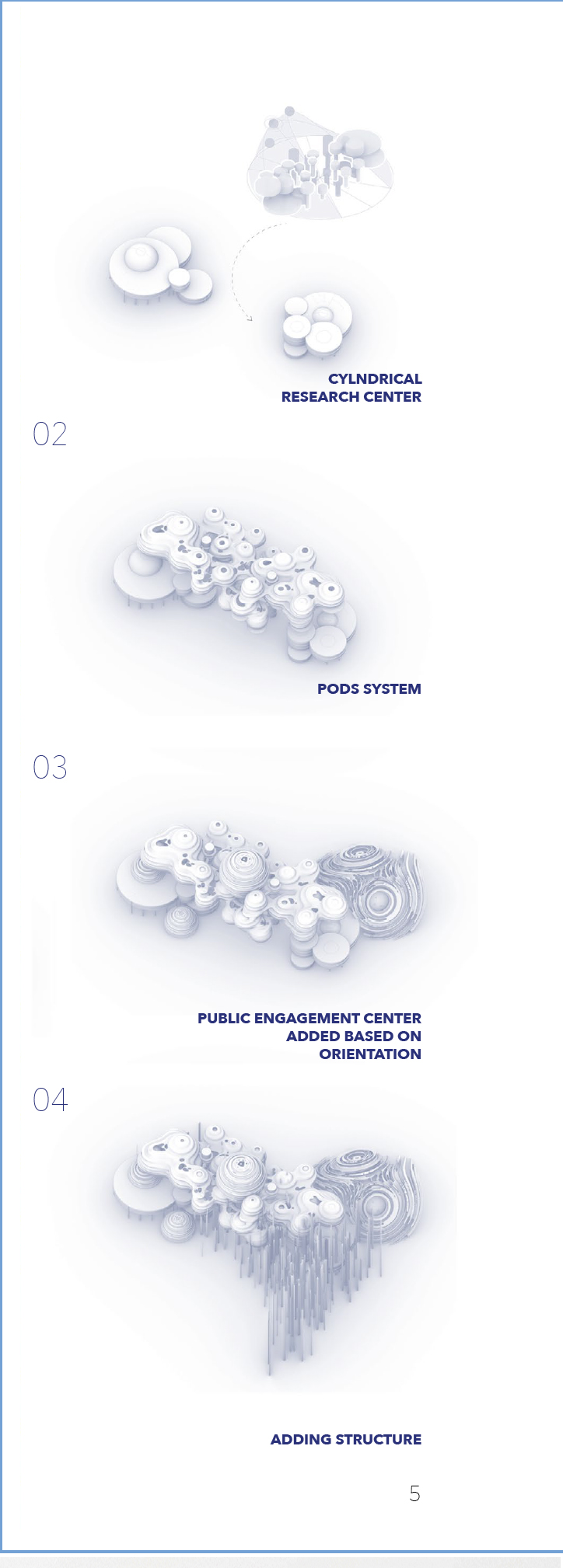
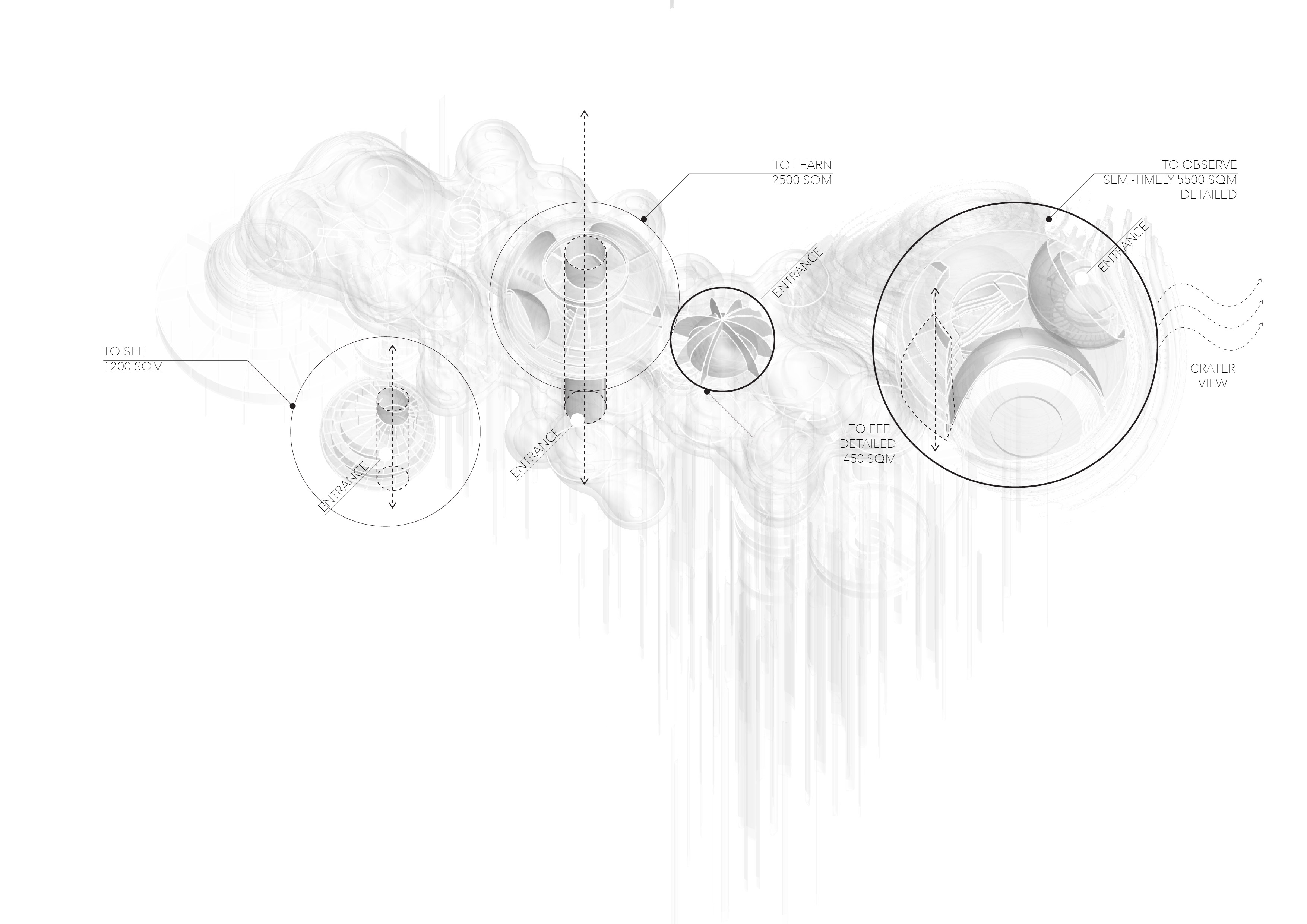
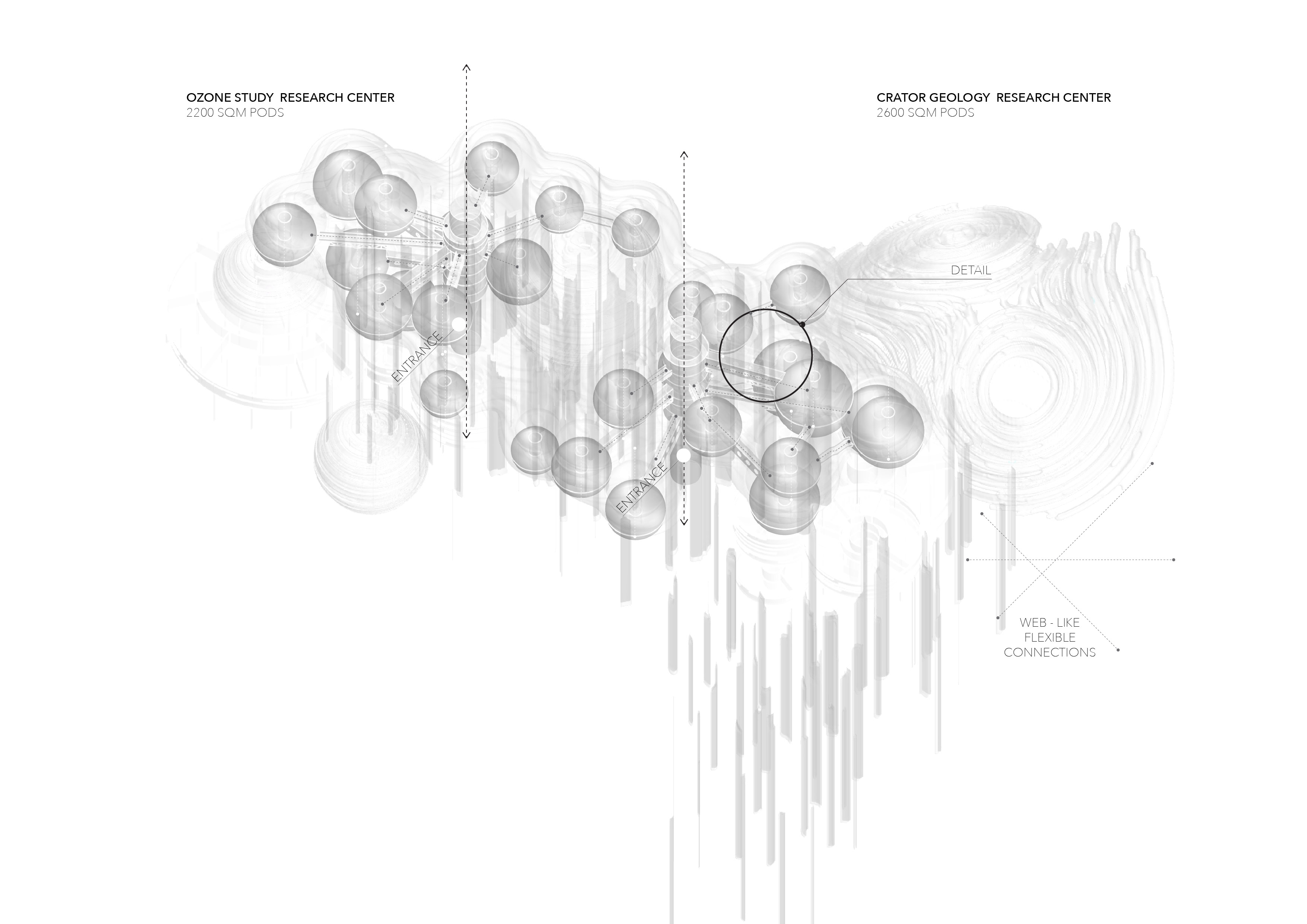
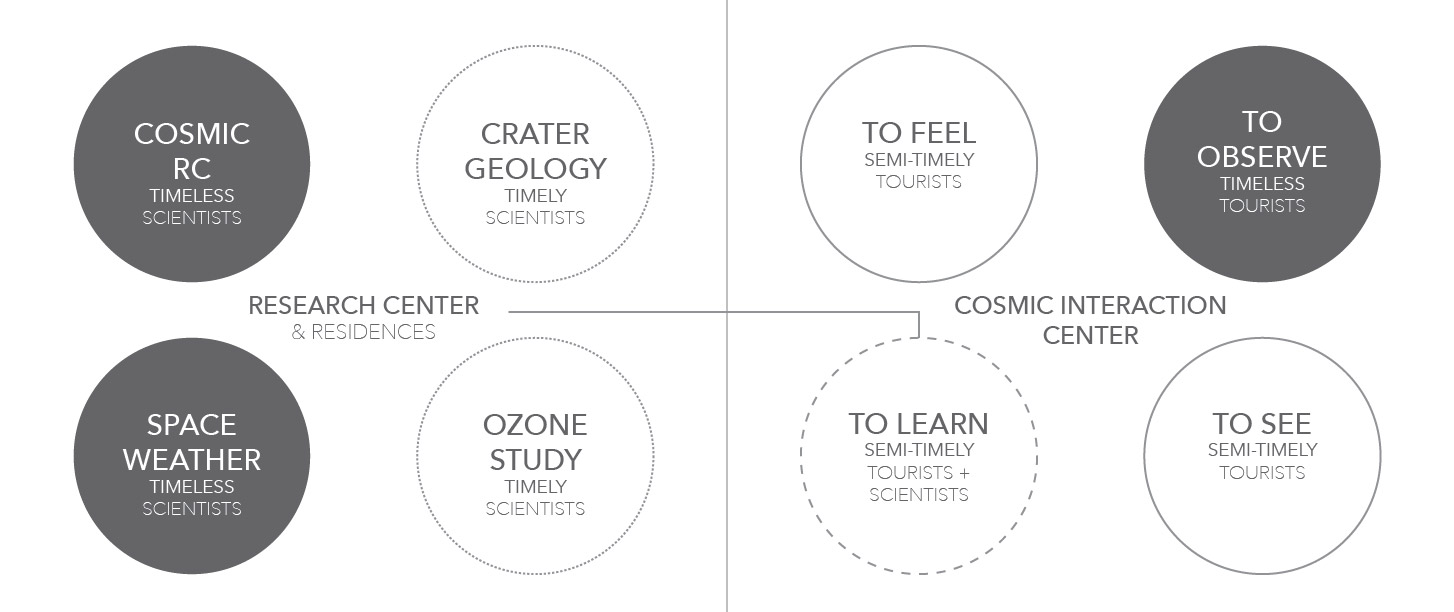
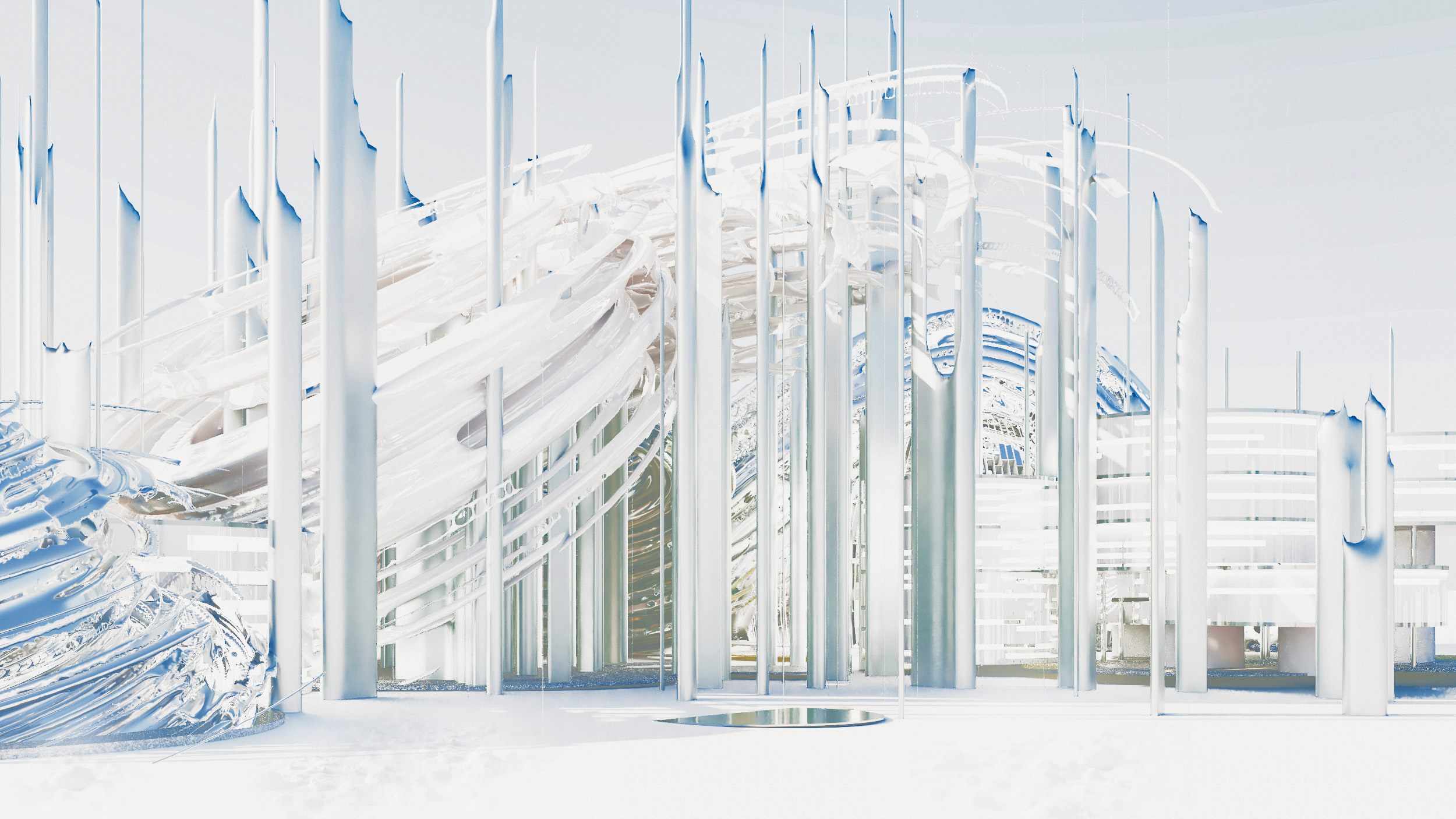
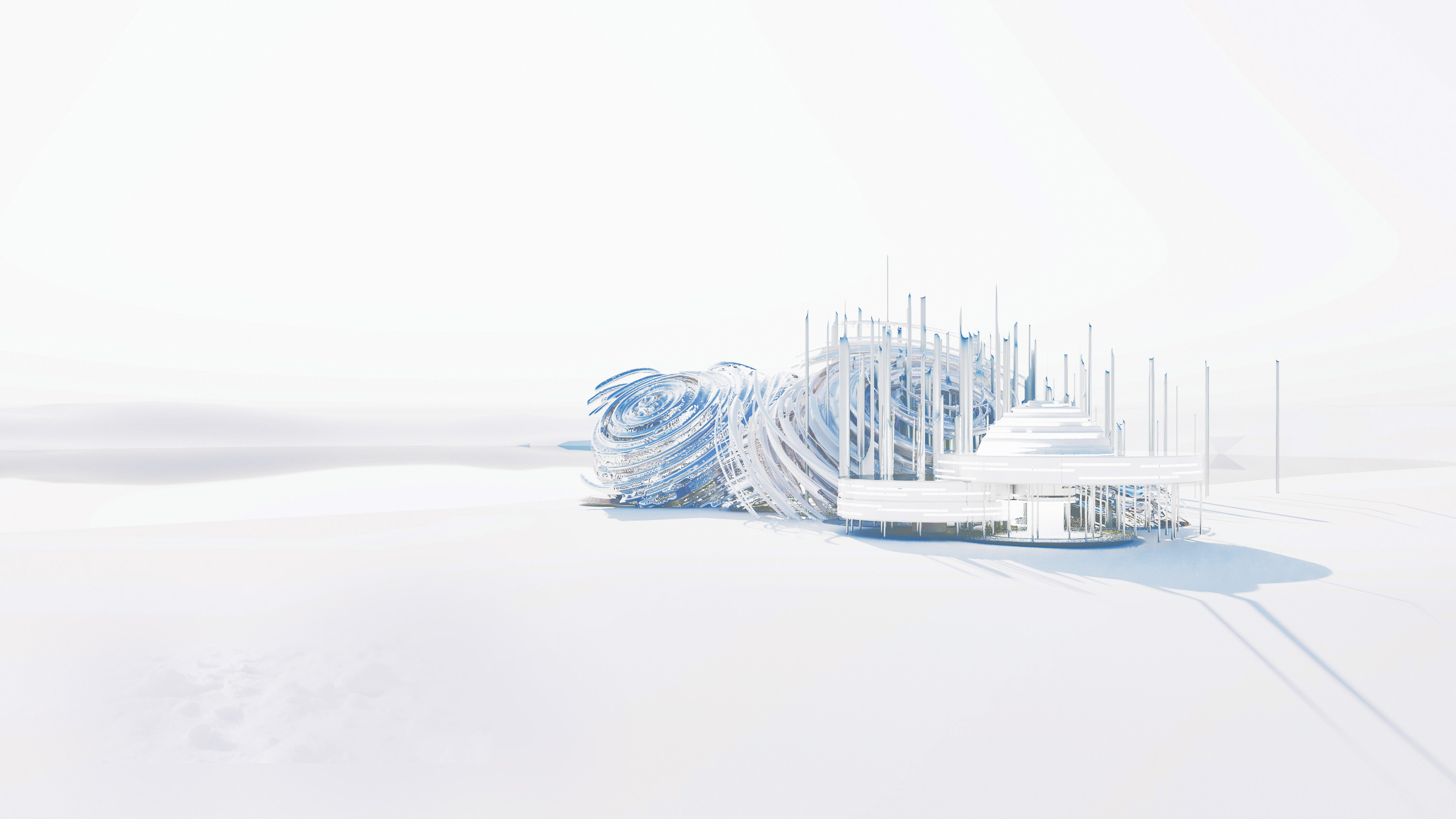
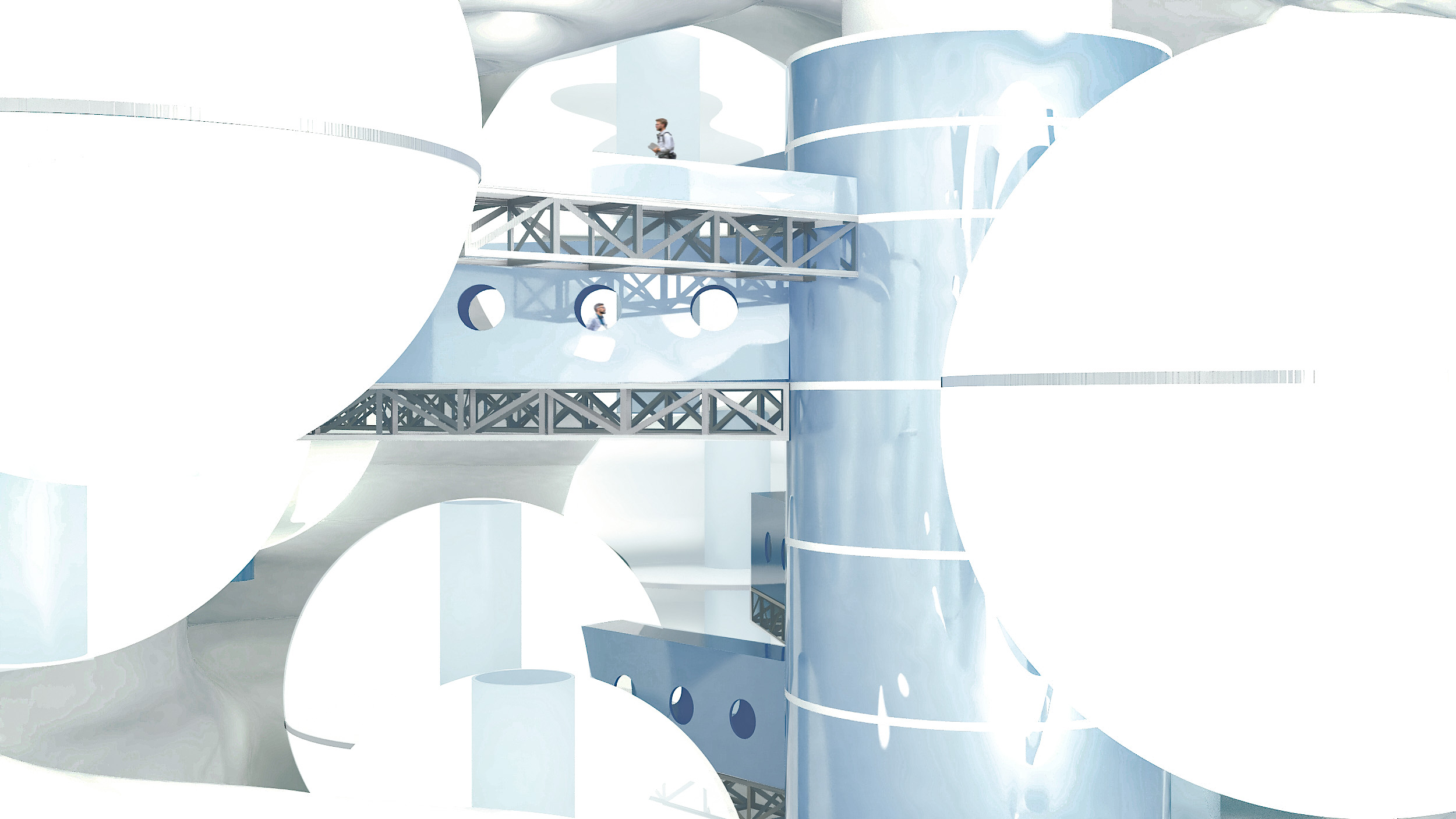
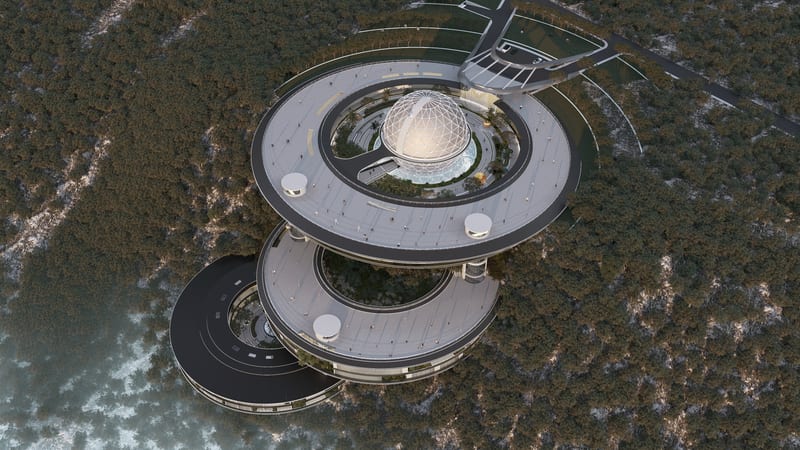
The design is inspired by cosmological systems, stellar alignments, and the continuous expansion of the universe. At the heart of the project lies the idea of architecture as a temporal and experiential cosmic instrument, responding to celestial cycles and events across years, decades, and centuries. The project is organized into three interconnected components: a timely structure that gradually ascends into the troposphere over time, a semi-timely structure that remains functional after the ascent, and a timeless component anchored permanently within the site. Programmatically, the project combines research facilities with public engagement spaces. Research centers are divided into timely and timeless categories, housing ozone laboratories, crater geology facilities, cosmic meteorology centers, and residential spaces for scientists. Public areas include observatories, seminar spaces, immersive domes, spiraling exhibitions, and concentric experiential chambers designed to allow users to physically and emotionally engage with cosmic phenomena. Form generation emerged from the analysis of cosmic microwave background radiation and astronomical alignments, translated computationally through Grasshopper and Houdini into dynamic geometries informed by the Sun, Polaris, and constellations.


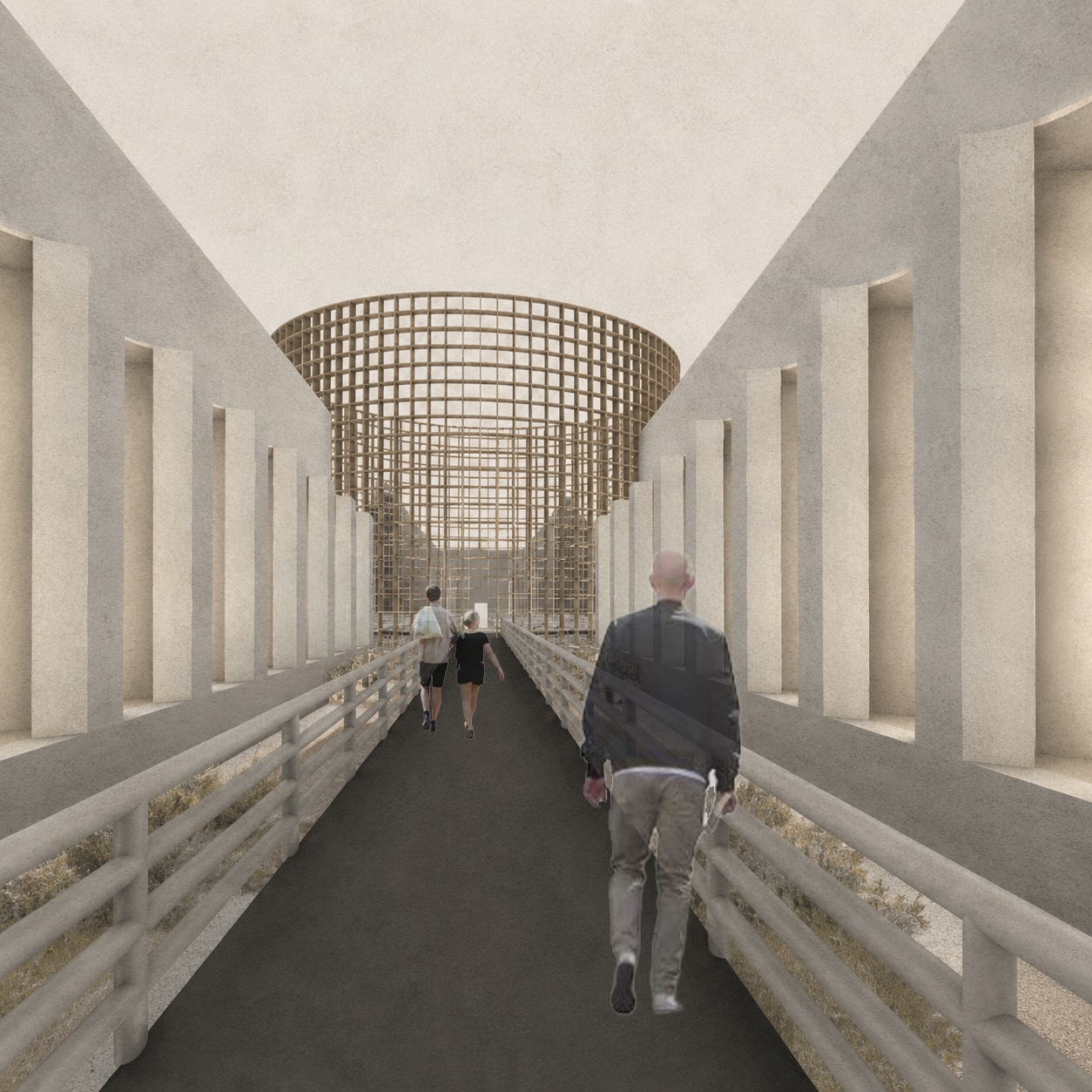
Movement through the project unfolds as a sensory and existential journey that shifts between darkness, light, expansion, and perception. Users navigate through spiraling pathways, concentric circulation routes, ramps, and vertically monumental spaces that evoke the scale and rhythm of the cosmos. Transitional environments play a central role in the experience, from narrow passages representing pre-Big Bang absence to immersive chambers where sound, temperature, texture, and light react dynamically to human presence and cosmic events. Experiential spaces such as the “Space Mirror” and the “Unfelt Chamber” transform scientific concepts into bodily experiences, allowing visitors to perceive architecture as an extension of cosmic forces. Ultimately, the project becomes more than a research institute or observatory; it acts as an architectural framework for reconnecting humanity with the universe, translating cosmological phenomena into spatial, emotional, and collective experience.