
Post by Ali Mrad
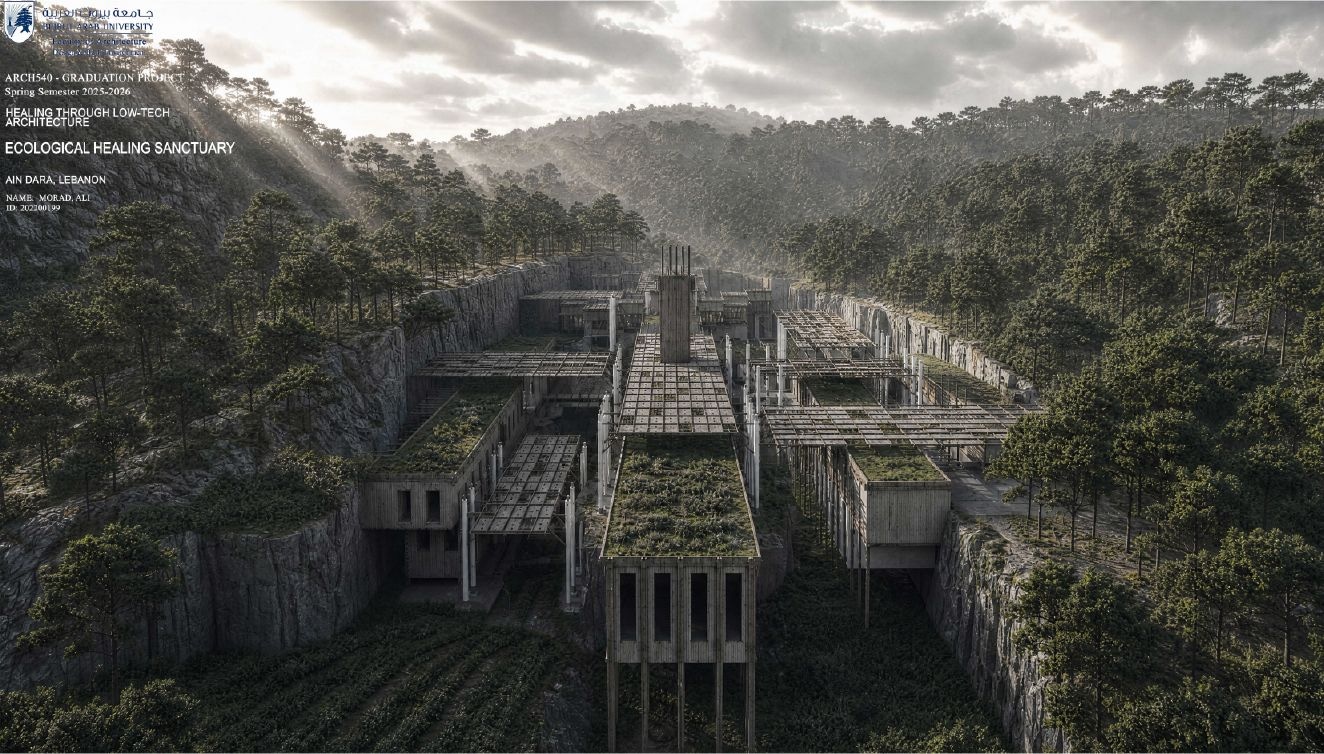
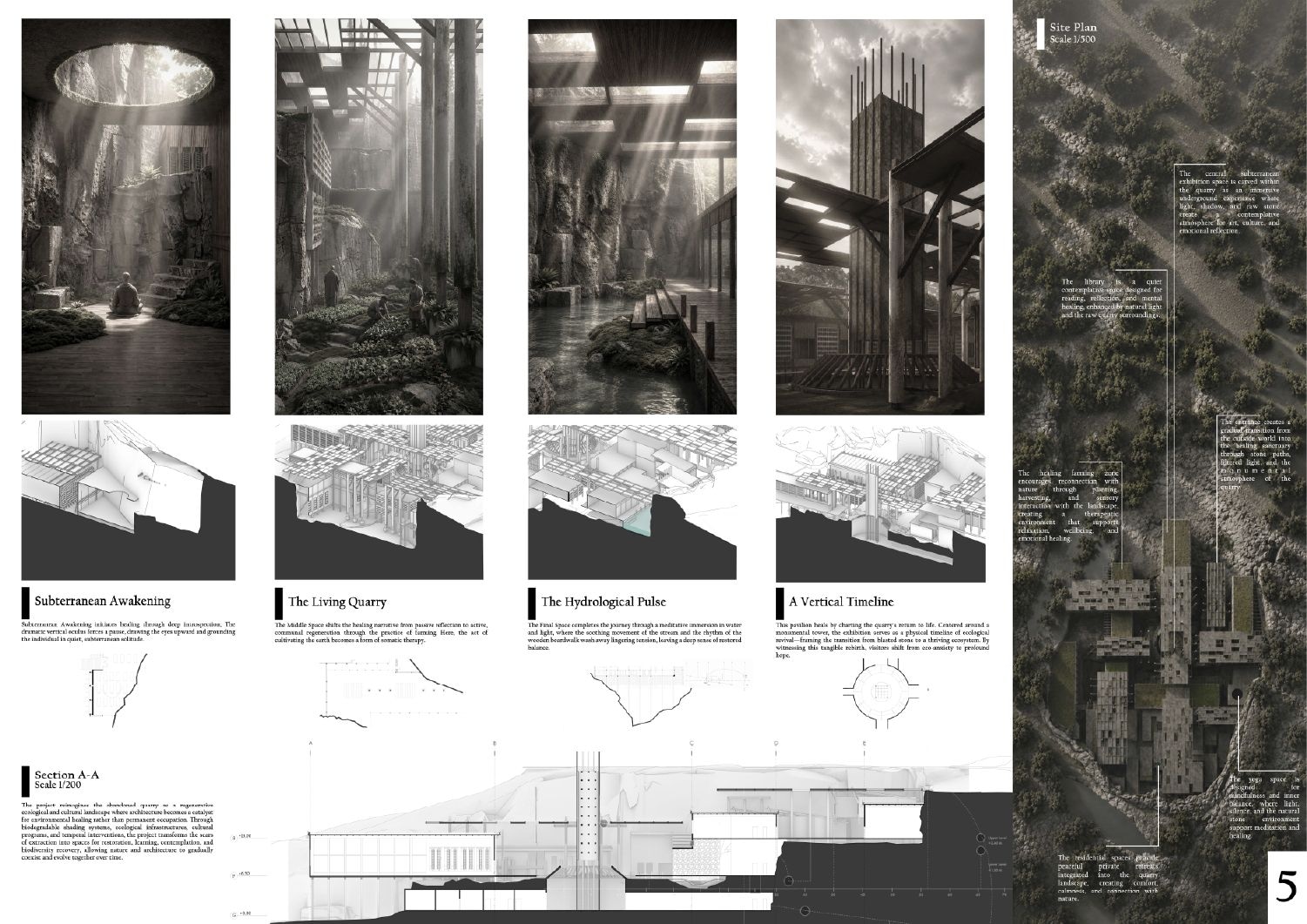
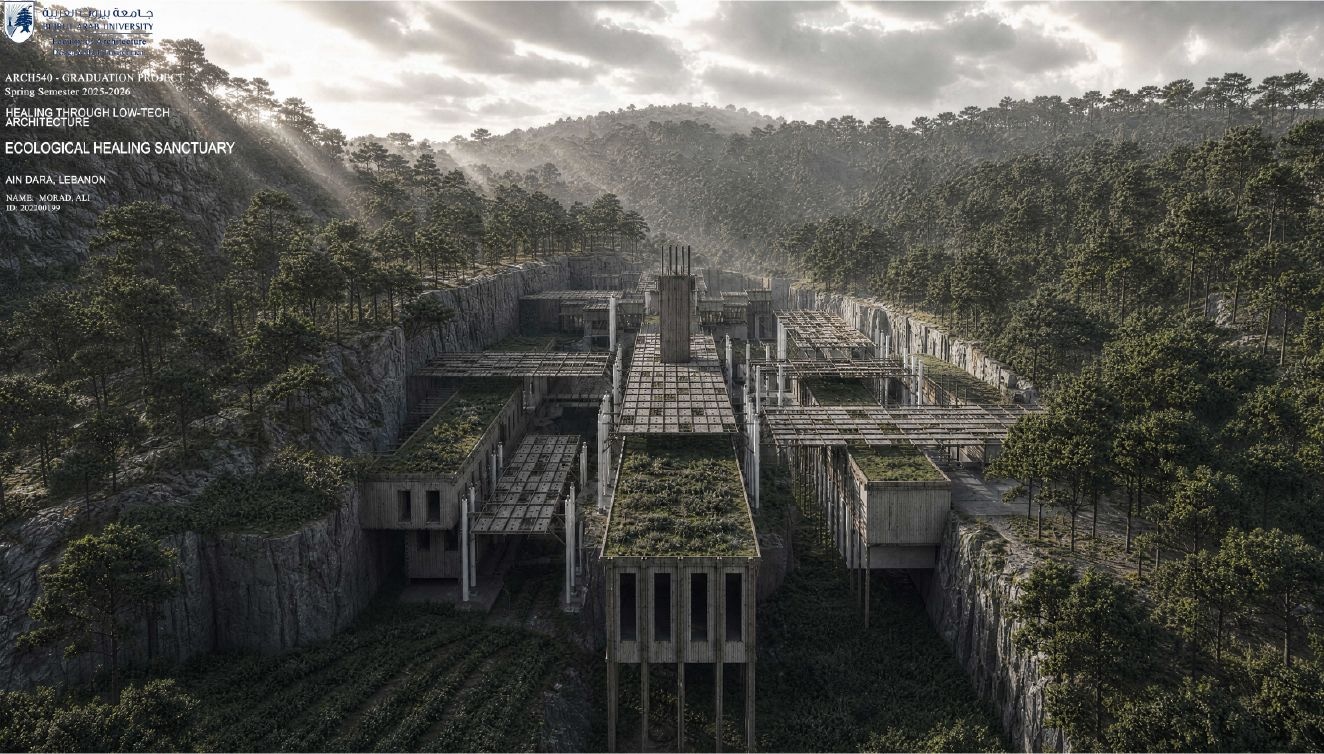
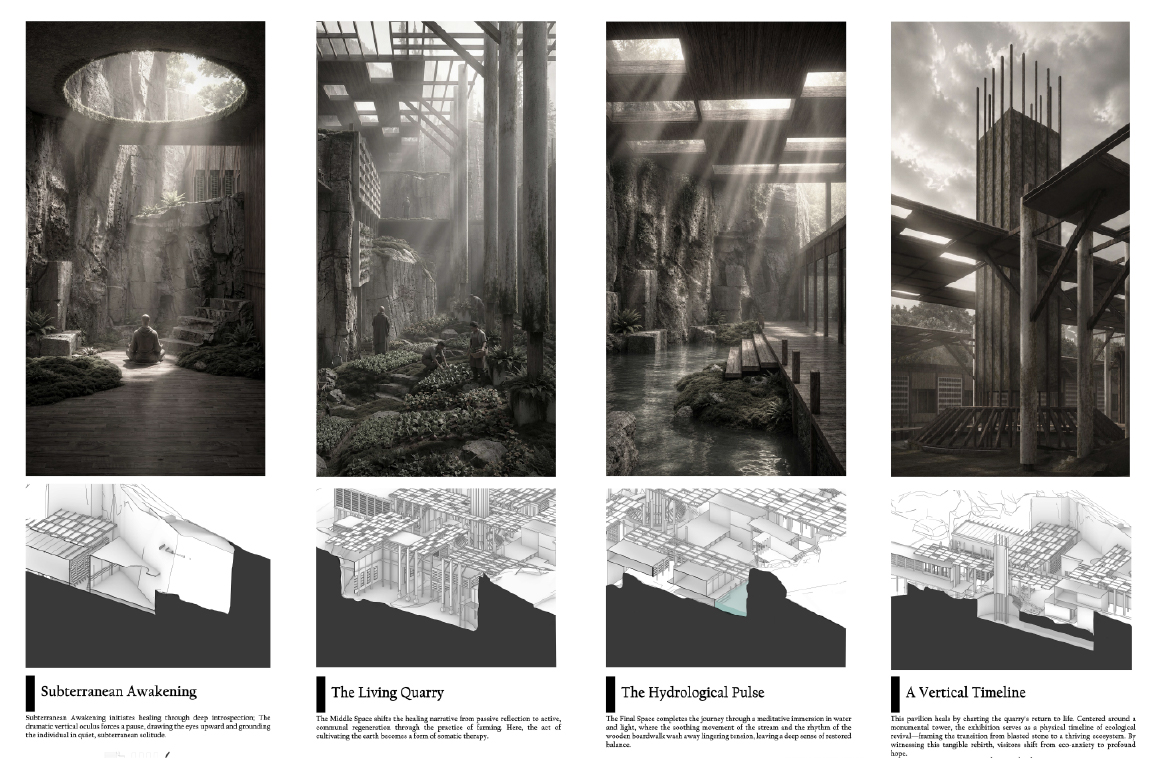
The Ecological Healing Sanctuary is a restorative architectural intervention situated within the abandoned quarries of Ain Dara, Lebanon. The project is grounded in the theme of "Society, Environment, & Sustainability," aiming to reconcile human well-being with ecological responsibility. By adopting a low-tech philosophy, the design moves away from high-energy mechanical systems in favor of passive design, local craftsmanship, and natural materials like earth, stone, and wood. This approach prioritizes a "carnal bond" between the built environment and the natural world, creating a meditative space that fosters emotional and mental relief through a spiritual reconnection to nature.
As an Ecological Healing Sanctuary, the typology merges wellness, ecology, and sustainability to promote physical and mental health. The design is specifically responsive to the site's aggressive post-industrial topography, appearing to grow out of the geological features rather than dominating them. The program includes therapeutic zones, meditation halls, and eco-labs, all integrated into a landscape of gardens and water features. By utilizing biophilic design and sensorial materials, the sanctuary serves as both a safe haven for visitors and a catalyst for social cohesion and environmental education within the local community.

The project proposes a regenerative architectural intervention that aims to revive the "wood wide web"-the underground fungal network essential for forest communication-within the damaged landscape of a quarry. By utilizing mycelium blocks as a primary building material, the structure acts as a living catalyst for soil restoration. These blocks are not intended to be permanent; Instead, they serve a dual purpose as both a low-tech structural element and a source of organic nutrients. As the mycelium interacts with the barren quarry floor, it breaks down toxins and creates a hospitable environment for microbial life, effectively "healing" the ground from the inside out. Over time, these mycelium structures are designed to degenerate into the soil, completing a multi-generational lifecycle that prioritizes ecological legacy over architectural permanence... As the blocks decompose, they release stored nutrients and fungal spores that re-establish the symbiotic relationships between plants and fungi. This process facilitates the transition from an industrial wasteland back to a self-regulating ecosystem. By the end of the project's 100-year timeline, the physical building will have entirely vanished, leaving behind a thriving, interconnected forest that stands as a testament to the power of restorative, low-tech architecture.

To heal the first layer of soil (A horizon) within the abandoned quarry, the project introduces structural mycelium bricks as a temporary regenerative medium. These bricks, composed of a rammed-earth and mycelium composite, function as a biological "scaffold" that actively releases fungal spores when triggered by environmental moisture. As the structural integrity of the bricks begins to dissolve over an 80-year cycle, the mycelium hyphae penetrate the compacted quarry floor, establishing a complex underground network that reintroduces essential organic matter and nutrients. This process facilitates the transition from an industrial wasteland to a nutrient-rich substrate, fostering the return of the biogeochemical cycle and allowing for the successful establishment of pioneer plant species and diverse terrestrial habitats.